
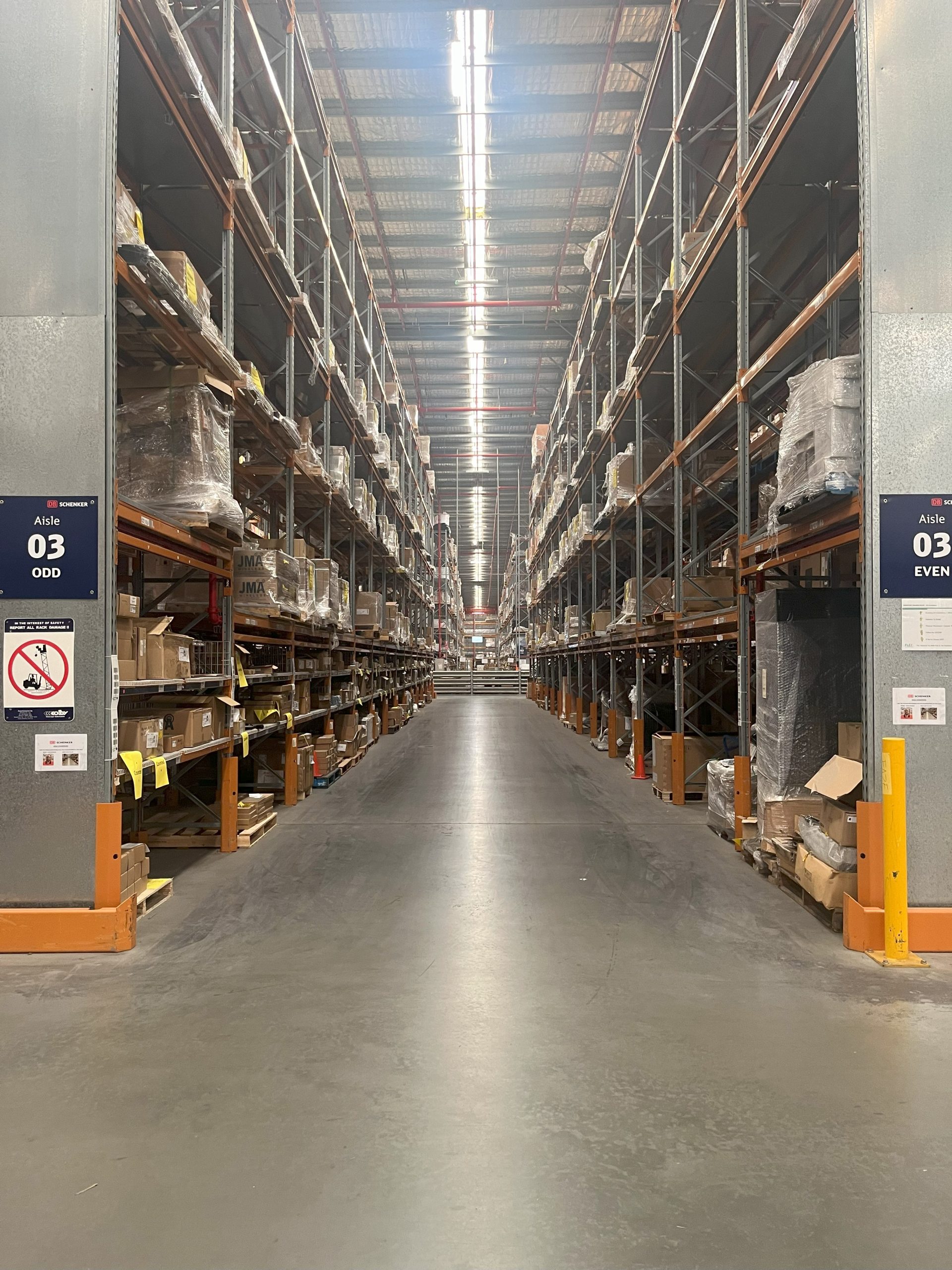
What are Legislative Obligations for storage of Lithium-Ion Battery in Various Australian States and Territories?
Lithium-ion batteries (LiBs) are classified as Class 9 Dangerous Goods (DG) under the Australian Dangerous Goods Code (ADGC), with the UN number UN 3480 when stored as standalone units. Under the Globally Harmonised System (GHS) of classification, LiBs are identified as hazardous chemicals, primarily due to their fire, thermal runaway, and explosion risks. It is important to note that LiBs integrated into articles or equipment—such as electric vehicles (EVs), laptops, or industrial machinery—are not regulated as Dangerous Goods under storage legislation. Similarly, if batteries are connected to the grid or in active use, they are typically treated as part of the operating plant or equipment rather than DG.
However, once these batteries are stored as standalone energy storage units in a warehouse, distribution centre, or other facility, they are legally considered Dangerous Goods (or hazardous materials) and attract obligations under state and territory legislation.
At Risk and Safety Solutions Melbourne (RSSM), we specialise in helping businesses understand and meet their obligations in relation to LiB storage, including Fire Safety Studies (FSS), Dangerous Goods compliance assessments, and liaison with regulators and emergency services.
1 What is the legislative obligation for lithium-ion battery storage in Victoria?
In Victoria, LiBs are legislated under the Dangerous Goods (Storage and Handling) Regulations 2022. Schedule 2 of the DG Regulations provides clear and straightforward guidance on a Person Conducting a Business or Undertaking (PCBU)’s obligations, such as determining whether stored quantities fall under Placard Quantity (PQ), Manifest Quantity (MQ), or Fire Protection Quantity (FPQ). The quantity thresholds determine legislative obligations such as notification to WorkSafe Victoria, and in some cases, seeking written advice from Fire Rescue Victoria (FRV) or the CFA, depending on jurisdiction.
RSSM has recently assisted building owners, insurers, tenants, and operators in navigating their legislative obligations, ensuring compliance while maintaining safe and cost-effective operations.
2 What are the requirements in NSW for lithium-ion battery storage?
New South Wales (NSW) has a different framework to Victoria, operating under the Work Health and Safety (WHS) Regulation 2025. Under Chapter 7 of the Regulation, a Person Conducting a Business or Undertaking (PCBU) must meet obligations that depend on the quantities of hazardous materials stored onsite.
While Schedule 11 of the WHS Regulation 2025 sets Placard and Manifest thresholds for hazardous chemicals, LiBs do not always fit neatly into these categories since Schedule 11 is based on GHS hazard categories rather than transport DG classes. This means sealed articles such as consumer batteries may not trigger thresholds, yet they still pose significant risks.
Regardless of GHS classification, PCBUs still have a primary duty of care under Sections 19 and 20 of the NSW WHS Act 2011 to manage risks as low as reasonably practicable (ALARP). This requires risk assessment, implementation of controls, and appropriate consultation with stakeholders, emergency services, and regulators.
Fire and Rescue NSW (FRNSW) has published a position statement specifically for LiB storage.
Sites with a combined total of 25,000 kg or more of lithium batteries (including lithium-ion, lithium-ion polymer, and lithium metal polymer) are considered to pose a fire and life safety risk equivalent to a Manifest Quantity (MQ) of hazardous chemicals. This threshold applies regardless of whether batteries are stored standalone, within battery packs, or integrated into EVs or plant equipment.
In such cases, Regulation 361 of the WHS Regulation 2025 requires the development and submission of an Emergency Plan, which must be lodged with FRNSW. This plan should include:
- An emergency plan prepared under Regulation 43 of the NSW WHS Regulation 2025.
- An Emergency Services Information Package (ESIP) in accordance with FRNSW fire safety guidelines.
3 What about other states such as WA, Qld, SA, TAS and NT?
Other states and territories, including Queensland, South Australia, Tasmania, and the Northern Territory, generally operate under the Model WHS Regulations 2011, similar to NSW. This means that LiB storage obligations, thresholds, and general duty requirements are largely consistent across these jurisdictions.
However, it is important to note that Western Australia (WA) has adopted a modified version of the Model WHS Regulations. As such, certain requirements, including those relating to emergency planning and fire service liaison, may differ. Additionally, fire brigade requirements and emergency service engagement vary between jurisdictions.
Businesses should therefore seek expert guidance to interpret these requirements in their local context. At RSSM, we have assisted clients nationwide in understanding their obligations under state and territory laws, and in developing tailored solutions that address both compliance and safety performance.
4 Where Should I Start, and How Can a Consultant Help?
At Risk and Safety Solutions Melbourne (RSSM), we are industry leaders in lithium-ion Battery Storage requirements and fire safety assessments. Our team has delivered numerous fire safety-related studies and compliance reviews for clients across Australia, helping them navigate complex legislative requirements with confidence.
If you need expert support in fire safety for submitting to the regulator, insurer, or building owner for your warehouse, distribution centre, waste recycling facility, or site, contact us today to discover how we can provide tailored, practical, and cutting-edge safety solutions for your project.
7 What Are the Most Reliable Sources for Understanding Lithium-Ion Battery Fire Safety and Risk?
Here are trusted national and international references we recommend:
- FRNSW (2023) – Technical Information: Large-Scale External LIB Fire Safety Study Considerations
- FRV (2025) – Fire Safety Guideline GL-55: Battery Energy Storage Systems
- AFAC (2023) – BESS Emergency Response Guidelines
- CFA (2024) – Design Guidelines for Renewable Energy Facilities (v4)
- HIPAP 2 (2011) – NSW Planning’s Fire Safety Study Guidelines
- AS/NZS 5139:2019 Safe installation of energy storage systems
-FRV (2025) - GL 54 Fire Safety Guideline
- NFPA 855 (2024) – Standard for the Installation of Stationary Energy Storage Systems
- UL 9540 – Energy Storage System Requirements
- FM Global DS 5-33 (2020) – Property Loss Prevention: Energy Storage Systems
- AS/NZS 4681 (2000) – Storage & Handling of Class 9 Dangerous Goods
- AS 3959 (2018) – Construction of Buildings in Bushfire-Prone Areas
- AS/IEC 62619 (2023) – Safety of Secondary Lithium Cells
- IEC 62897 – Stationary ESS Safety Requirements
- AS/NZS 5139 (2019) – Electrical Installations – Safety of Battery Systems
- ISO 31000:2018 – Risk Management Guidelines
- Energy Safe Victoria (2023) – High Voltage and Complex Installations Standard
- Safe Work Australia (2012) – Emergency Plans and Procedures
- NFPA 68 & NFPA 69 – Explosion Protection and Prevention Standards
- FRNSW (2024) – Position Statement: Open Yard Storage of BESS
Reach out to us directly through our Contact Us page