
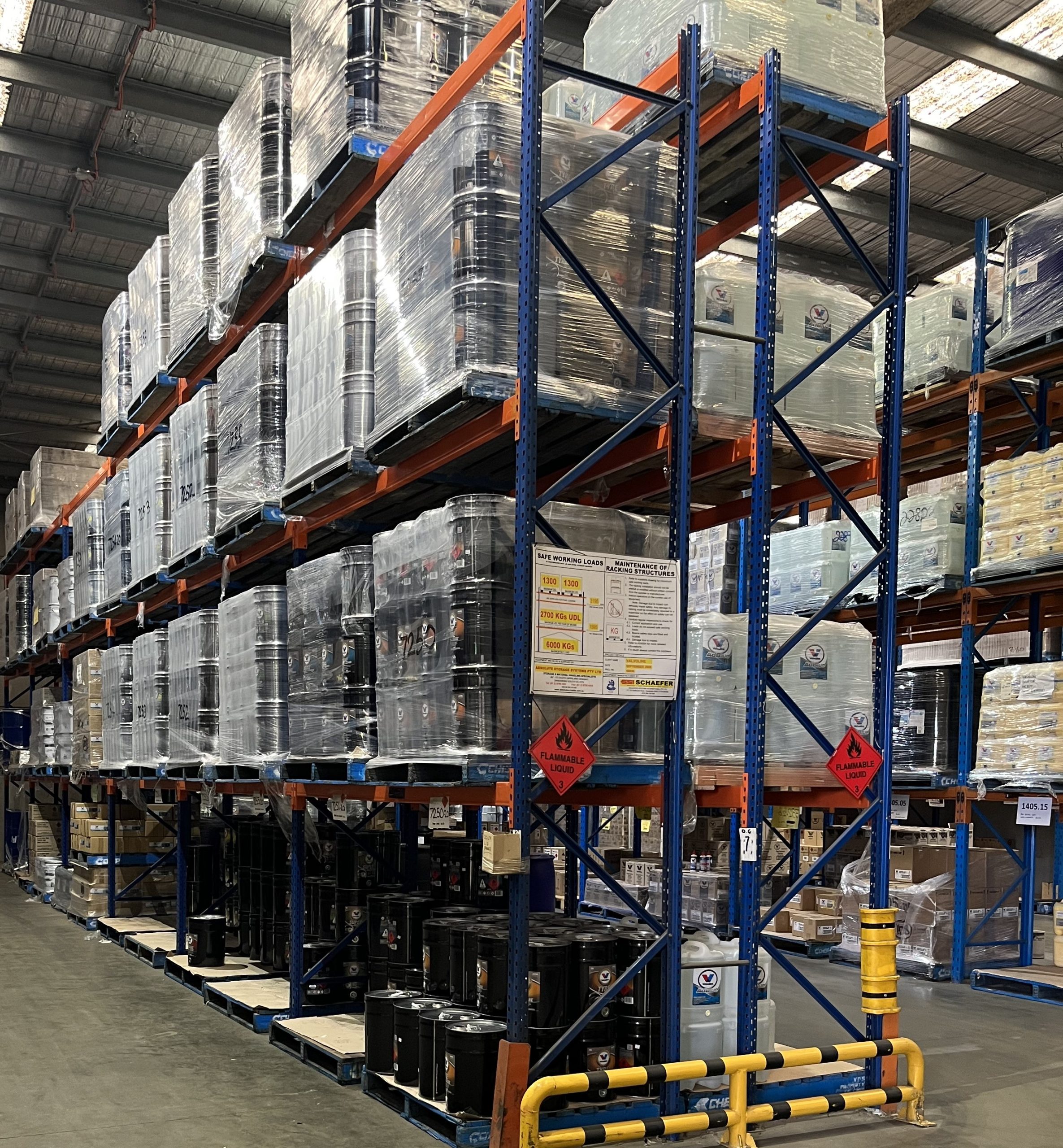
A B C of Dangerous Goods
1 What are Dangerous Goods (DG)?
As defined in the Australian Code for the Transport of Dangerous Goods by Road & Rail (ADGC), Dangerous goods* are: a) goods or article that are determined under Regulation to be dangerous goods, or b) goods or articles that satisfy the criteria set out in the ADGC In general, Dangerous goods (DG) are substances that have damaging properties such as corrosive, flammable, combustible, explosive, oxidising or reactive or have other hazardous properties. Although every Australian states and territories has unique Acts and Regs, but definition of Dangerous Goods are uniform. For example, the Victorian Dangerous Goods Act 1985 (DG Act) defines which substances are dangerous goods – but adopted the ADGC definition. Examples of common dangerous goods:- explosives, e.g. TNT, ammunition, ammonium nitrate
- flammable liquids, e.g. unleaded or leaded petrol, E10 fuel, gasoline, kerosene, turpentine, flammable paints, alcohol, etc.
- flammable gases, e.g. LPG, LNG, methane, butane, hydrogen, ammonia, etc.
- flammable solids, e.g. solidum, phosphorus, etc
- corrosives liquid or gases, e.g. hydrofluoric acid, sulfuric acid, caustic soda, etc.
- non-flammable, non-toxic gases, e.g. CO2, N2, etc.
- toxic gases and liquids, e.g. hydrogen sulphide, paraquat, pesticides, herbicides, chlorine
- radioactive materials, e.g. uranium, radium, etc.
- biohazards – pathogens
- oxidizing and reducing agents, e.g. chlorine
- asbestos
Combustible materials such as combustible liquid diesels are not dangerous goods.
What are Dangerous Good but not regulated by Work Safe?
The following substances are dangerous goods but not fall under the Work Safe or Safe Work authorities legislative farmwork -i.e., for the purposes of all Australian State and Territories Dangerous Goods Acts.- Class 6 - Division 6.2 - infectious substances
- Class 7 - Radioactive material
- Substances not subject to the ADG Code because of a special provision.
2 What are the Classes of Dangerous Goods?
Dangerous Goods Classes and Divisions with examples| Class | Divisions | Examples |
|---|---|---|
| Class 1: Explosives | 1.1: Mass explosion hazard | Fireworks, TNT, dynamite, Ammonium Nitrate, Ammunition |
| 1.2: Projection hazard | ||
| 1.3: Fire hazard with minor blast/projectile hazard | ||
| 1.4: No significant hazard | ||
| 1.5: Very insensitive with mass explosion hazard | ||
| 1.6: Extremely insensitive without mass explosion hazard | ||
| Class 2: Gases | 2.1: Flammable gases | 2.1: Methane, Propane, Butane |
| 2.2: Non-flammable, non-toxic gases | 2.2: Helium, Nitrogen | |
| 2.3: Toxic gases | 2.3: Chlorine, ammonia | |
| Class 3: Flammable liquids | N/A | Petrol, Ethanol, Methanol |
| Class 4: Flammable solids, substances liable to spontaneous combustion, substances which, on contact with water, emit flammable gases | 4.1: Flammable solids, self-reactive substances, solid desensitized explosives | 4.1: Matches, Sulfur |
| 4.2: Substances liable to spontaneous combustion | 4.2: Phosphorus | |
| 4.3: Substances which emit flammable gases on contact with water | 4.3: Calcium carbide | |
| Class 5: Oxidising substances and organic peroxides | 5.1: Oxidising substances | 5.1: Hydrogen peroxide |
| 5.2: Organic peroxides | 5.2: Organic peroxides like benzoyl peroxide | |
| Class 6: Toxic and infectious substances | 6.1: Toxic substances | 6.1: Pesticides, Arsenic, Hydrogen Cyanide |
| 6.2: Infectious substances | 6.2: Pathogenic Bacteria, viruses | |
| Class 7: Radioactive material | N/A | Uranium, Radium |
| Class 8: Corrosive substances | N/A | Hydrochloric Acid, Sulfuric acid, Lead acid batteries |
| Class 9: Miscellaneous dangerous substances and articles, including environmentally hazardous substances | N/A | Asbestos, Lithium-Ion batteries, Marine pollutant, Pesticides |
3 Dangerous Goods Vs Hazardous Substances – difference?
Although, some jurisdictions in Australia dangerous goods and hazardous substances are regulated under separate laws, but most of the states and territories operates under the National Model Workplace Safety and Health Regulations. All dangerous Goods are hazardous substance, but not all hazardous substances are dangerous goods. In Victoria, in certain cases, meeting the requirements of one set of regulations may satisfy the obligations of the other.
4 Are combustible liquids dangerous goods?
Combustible liquids, either C1 or C2 combustible liquids, are not classified as Dangerous Goods under the ADG Code. However, C1 combustible liquid such as Diesel still pose fire risk, therefore they are regulated product under the Victorian Dangerous Goods Act and regulations and Australian national Model Work Health and Safety (WHS) regulations. The following points are the key difference. a) Flammable Liquids are Class 3 Dangerous Goods: Flashpoint below 61°C b) Combustible Liquids: Flashpoint above 61°C5 How do I know, if a product I am using is a Dangerous Goods?
Please find info in one of the following documents a) ADG code listed most of the materials Dangerous Goods Classification. b) Check Section 14: Transport information of the goods safety data sheet (SDS). c) Look in the label - Dangerous Goods are typically labelled with standard placards d) Dangerous Goods are assigned a unique UN number. This number, listed on the label or SDS, identifies the substance in international transport. e) Ask manufacturer or supplier f) Seek assistance from the Risk and Safety Solutions Consultant – info@riskandsafetysolutions.au6 What are the Dangerous Goods labels or Placards use in Australia?
The following labelling and placard are used in Australia wide. Please refer to the ADG code and respective state or territories regulations for further details. The outer warning notice needs to be located at the main outer vehicle entry point as shown below
 This placard must be 600 mm wide and 120 mm high with letter of 100 mm high
- All Dangerous Goods class labels will need to be 100 mm x 100 mm in size
- All “Danger” safety signs will be supplied to standard industry size being 300 mm high x 450 mm wide
- In all cases the minimum “Danger” safety sign should not be smaller than 250 mm square with minimum 50 mm high lettering
- The Class 9 composite placard requires the following composite placard adjacent to all entry doors into the warehouse.

7 How Dangerous Goods align with the Globally Harmonised System (GHS)?
Although, in Australian Dangerous Goods regulations follow the Australian Dangerous Goods (ADG) Code, since 2015 Australia adopted GHS requirements under national Model Work Health and Safety (WHS) Regulations except in Victoria follow Victorian Dangerous Goods (Storge and Handling) Regulations. This dual approach ensures consistency while addressing specific safety needs for both transport and workplace environments. It should be noted that Dangerous Goods classifications complement GHS by focusing on transport safety, while GHS provides a broader framework for chemical hazard communication across various sectors. This is a complex issue, please seek consultant assistance from the Risk and Safety Solutions Melbourne for further assistance.8 Does a waste recycling facility fall under the Dangerous Goods site?
Some waste facility also requires storing and handle of dangerous goods as part of their process materials. These waste recycling facilities requires to comply with both Work Safe and Environment Protection Authority legislative requirements. Please seek consultant assistance from the Risk and Safety Solutions Melbourne for further assistance.9 When a site has Dangerous Goods must notification to Work Safe/ Safe Work regulators?
If a facility does reach the quantity of dangerous Goods at or above the threshold of Manifest Quantity as per the respective legislation, they must notify to the regulator. For example, in Victoria this threshold is mandated in the Schedule 2 of the Dangerous Goods (Storage and Handling) regulations 2022.10 When a site must seek written advice from a local fire brigade such as FRV, FRNSW, CFA, RFS, DFS?
If a facility/site or warehouse does reach the quantity of Dangerous Goods at or above the threshold of Manifest Quantity as per the respective legislation, they must seek written advice from the local fire brigade. For example, in Victoria this threshold is mandated in the Schedule 2 of the Dangerous Goods (Storage and Handling) regulations 2022.11 How frequently a Dangerous Goods site must notify regulator and fire brigade?
Refer to the respective state or territories dangerous goods regulations. Usually it varies 2- 5 yearly interval if there are no changes of process, quantity, ownership, hazards, DG Class, risk levels, control measures, etc.12 How a site needs to make a notification to a regulator?
Most of the Australian regulators and fire agencies accept notification or communication electronically. Please check in your regulator website or contact with a Risk and Safety Solutions Melbourne consultant for further assistance.13 What is a Dangerous Goods Manifest?
Many people that including some consult often misinterpret the term “Dangerous Goods Manifest’. Although it is sound like a register of a dangerous goods including Class and quantity, it is more than that. A dangerous goods manifest requires a substantial number of documents, especially for the purpose of a dangerous goods storage and handling sites emergency response. It is a legislative obligation; thus, compline shall be made in accordance with the respective jurisdiction regulations. For example,- In NSW, it is requiring to have information as per the NSW Gov. Hazardous Industry Planning Advisory Paper (HIPAP) No 1 Emergency Planning
- In Victoria, it is referred to Schedule 3 of the Dangerous Goods (Storage and Handling) regulations 2022; and fire brigade (FRV and CFA) the emergency information book (EIB).
14 What is a Safety Data Sheet (SDS)? May I accept an overseas SDS in Australia?
A Safety Data Sheet (SDS) provides critical information about a Dangerous Goods or hazardous substance. It includes critical information for using a product safely. It is a legislative obligation to produce and use a SDS in Australia. In Australia, SDSs must comply with the Globally Harmonized System of Classification and Labelling of Chemicals (GHS) and Work Health and Safety (WHS) Regulations. It must have 16 sections and content of each section must comply with the legislation. Overseas SDSs can only be used in Australia if they are revised to meet Australian-specific requirements.15 How do I find a good Dangerous Goods Consultant?
Finding a Dangerous Goods consulting firm through an online search is relatively easy. However, identifying a competent consultant can be challenging, especially if you’re unsure where to start or what questions to ask. Many consultants may produce reports that are merely copied or overloaded with irrelevant information, without fully understanding the implications for the client. This can lead to significant financial and operational difficulties for a proponent. Moreover, choosing a wrong consultant poses a serious risk to businesses, as regulators may issue improvement notices if issues are not addressed adequately. We always recommend verifying a consultant’s field-based experience, in addition to their desktop expertise, to ensure practical, actionable outcomes.16 What is a Dangerous Goods sub-risk?
A Dangerous Goods sub-risk is a secondary hazard, beyond its primary classification under the Australian Dangerous Goods (ADG) Code. Sub-risks are important because they inform additional threat of a dangerous goods.17 What is the Australian Standard uses for the storage and handling of flammable and combustible liquids?
Australian Standard ‘AS 1940:2017 - The storage and handling of flammable and combustible liquids’ use for storage and handling of flammable and combustible liquids. That is Class 3 Flammable liquids and C1 and C2 combustible liquids. This includes electrical substation transformer oil and alcohol beverage industry.18 What is Class 9 Dangerous Goods?
Class 9 Dangerous Goods are not a special class instead it is a place where all miscellaneous dangerous goods are placed. Therefore, this Classes of Dangerous Goods should not be assumed that they pose less risk than other Classes, therefore must not be taken lightly. There are numerous Class 9 Dangerous Goods those are Schedule 15 (in Model OHS Regs) and Schedule 14 (in Victorian OHS Regs) contribute in Major Hazard Facility (MHF) threshold calculation because of their potential threat capability. Examples include:- Lithium batteries (fire risk and chemical hazards).
- Environmentally hazardous substances (e.g., pesticides, PCBs).
19 Why Lithium-ion battery is a Dangerous Good?
Because of the risk of thermal runaway reaction and subsequently fire and explosion during storage, handling and transport; lithium-ion batteries are regulated under Class 9 Miscellaneous Dangerous Goods. However, if lithium-ion batteries are in use, means connected with electric grid or part of a equipment or vehicle; it is not regulated. Please seek consultant assistance from the Risk and Safety Solutions Melbourne for further assistance.20 Where to find more information?
- Risk and Safety Solutions Melbourne – www.riskandsafetysolutions.au
- Work Safe Victoria - Dangerous goods: Safety basics