
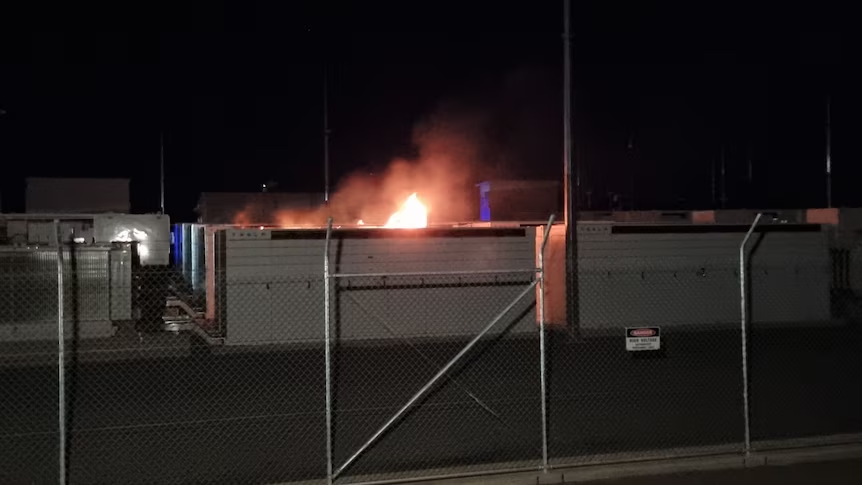
Fire Protection for a Lithium-Ion Battery Warehouse
Fire protection design for a Lithium-Ion battery warehouse requires enhanced sprinkler systems, hydrant capacity, thermal runaway detection, and performance-based fire risk assessment (FRA), Special Hazard Report (A2G2 of NCC) or a fire safety study (FSS), that aligns with local Australian and international recognised standards and guidelines such as NFPA 855 and FM Global guidance.

Where is the modern Lithium-Ion battery warehouse industry heading?
The rapid growth of lithium-ion battery (LiB) technology across electric vehicles, renewable energy systems, consumer electronics, and backup power applications has led to a significant increase in battery storage and warehousing facilities across Australia. While LiB products support decarbonisation and electrification, they also introduce unique and complex fire risks that differ substantially from conventional warehouse commodities.
Designing appropriate fire protection for a Lithium-Ion battery warehouse requires careful consideration of thermal runaway hazards, fire propagation potential, toxic gas generation, and emergency response challenges. This article outlines key fire protection measures typically required, referencing industry guidance such as NFPA 855, FM Global Data Sheets, and landlord standards (for example, Goodman and Stockland), while acknowledging the complex legislative landscape across Australian states and territories.
Fire Hydrant System in compliance with AS 2419.1 – Is It Enough??
A frequent question from operators and developers is whether a standard hydrant system is sufficient for LiB storage.
In most cases, hydrants alone are not enough.
While hydrant systems designed in accordance with AS 2419.1 provide essential manual firefighting capability, in most cases design for standard building or warehouse fire demand scenarios, where Special Hazard lithium-ion battery fires develop rapidly, produce extreme heat, and require very large water volumes primarily for cooling and exposure protection rather than direct extinguishment.
Guidance from NFPA 855 and FM Global emphasises that hydrants are a supporting system rather than the primary suppression method.
Sprinkler Protection AS 2118.1 compliance – Ceiling vs In-Rack vs no Sprinkler??
Automatic sprinkler protection remains the cornerstone of warehouse fire suppression, but the configuration, water application density and duration is critical for LiB storage.
It is important to note that AS 2118.1 does not currently provide specific sprinkler water density criteria for lithium-ion battery storage. As a result, designers and insurers frequently rely on FM Global Data Sheets, which are widely adopted internationally for LiB risk protection, as well as in Australia.
For higher rack storage, some landlords, such as Goodman, recommends for in-rack sprinklers, but in many cases, it is not that straightforward. The necessity of an in-rack sprinkler is subjective and needs to be defined with a Fire Risk Assessment.
It should be noted that a sprinkler is not a mandatory requirement for the storage of LiB. It depends on the total quantity and the overall target risk acceptance limit. This is one of the reasons why you need a subject matter expert's formal opinion.
Risk and Safety Solutions Melbourne (RSSM) provided many pieces of advice to warehouses such as DSV, Middy’s, Tolls on whether an in-rack sprinkler is needed or not.
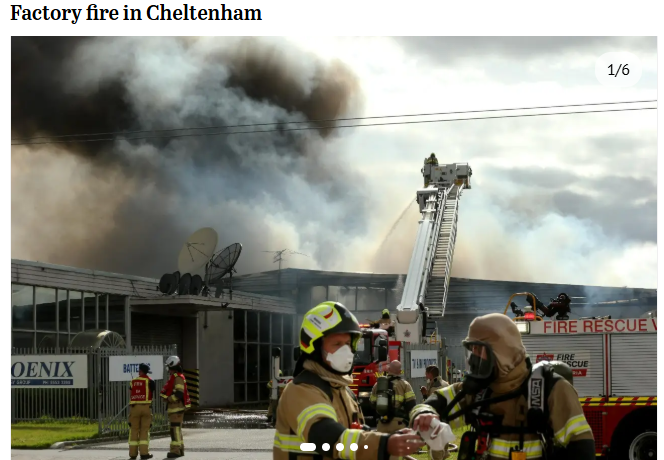
Detection Systems – Smoke, Thermal or Gas??
The detection strategy must address both early warning and hazardous gas conditions.
Aspirating smoke detection provides early warning. Thermal detection identifies heat escalation. Gas detection monitors hydrogen, carbon monoxide, and hydrogen fluoride where off‑gassing risk exists. NFPA 855, FM Global data sheet, Fire Rescue Victoria (FRV), County Fire Authority (CFA) and Fire Rescue NSW (FRNSW) guidelines highlight the importance of ventilation and gas monitoring in enclosed warehouses.
Emergency Plan (EP, ERP, EMP), Emergency Information Book (EIB) and Emergency Service Information Package (ESIP)
A generic Emergency Plan will not work for a Lithium-Ion battery warehouse. The fire and explosion risks from thermal runaway, toxic gas release, and re-ignition potential require site-specific and customised emergency documentation. The Emergency Plan (EP/ERP/EMP) is the occupier’s legislative document, setting out staff actions, evacuation, communication, and incident control arrangements, as required under frameworks such as NSW WHS Regulation 361 and in Victoria, consultation and emergency information provision to fire services aligns with DG (S&H) Regulations 52 and 53.
The Emergency Information Book (EIB) is a concise, on-site quick reference, summarising battery locations, key hazards, isolation points, and fire protection systems for use by staff and initial responders. It should be developed as per the FRV fire safety guidelines. This is the document needs by FRV or CFA crews during an emergency.
The Emergency Services Information Package (ESIP) is developed specifically for fire brigades, providing detailed pre-incident intelligence such as LiB quantities, state-of-charge risks, access, water demand, and firefighting strategy. Separating and customising these documents ensures both legislative compliance and effective emergency response for LiB incidents.
Legislative Complexity Across States and Territories?
There is no single harmonised national code governing LiB storage warehouses. Requirements arise from Dangerous Goods laws, WHS/OHS frameworks, building regulations, and planning conditions, varying across jurisdictions.
Landlord and insurer requirements, including FM-aligned sprinkler systems and storage limits, further influence design.
LIB in the warehouse should be treated as storage of Class 9 Dangerous Goods. Therefore, DG regulations for various states and territory must apply. For example
- In NSW, 25,000 kg is considered the Manifest Quantity equivalent.
- In Victoria – Placard, Manifest and Fire Protection quantity threshold applies for 5,000 kg, 10,000 kg and 20,000 kg of Dangerous goods. Operator should remember that it is Kgs of DG not battery. Seek RSSM assistance for the calculation on determining the DG quantity in a battery.
Why are used BBUs present a Higher Fire Risk than new Units?
Used Battery Backup Units (BBUs) pose a higher fire risk than new units and should not be managed the same way in storage warehouses. New BBUs are factory tested, undamaged, and typically stored and transported under controlled conditions, including managed State of Charge (SoC). This reduces the likelihood of internal failure during storage.
In contrast, used BBUs often come with an unknown history. They may be degraded, physically damaged during removal or transport, previously overheated, or stored at high or unknown SoC levels. These factors significantly increase the chance of an internal short circuit and thermal runaway. Higher SoC also means greater heat release, faster fire spread, and more toxic gas generation if a fire occurs, requiring more conservative storage, segregation, and fire protection controls.
In conclusion, Lithium-Ion Battery warehouse represents a step-change in warehouse fire risk. Conventional fire protection systems are often inadequate. FM Global guidance remains widely used given AS 2118.1 does not prescribe LiB sprinkler densities.
Risk and Safety Solutions Melbourne (RSSM) specialises in LiB fire risk assessment (FRA), Fire Safety Study (FSS), Special Hazard Report, and performance-based fire engineering advice to support compliant and insurable warehouse operations.
Reference Documents
- NSW Department of Planning. Hazardous Industry Planning Advisory Paper No. 1 (HIPAP 1) – Industry Emergency Planning Guidelines.
- Fire and Rescue NSW (FRNSW). Technical Information Sheet – Large-Scale Battery Energy Storage Systems (BESS) Fire Safety Guidance.
- Fire and Rescue NSW (FRNSW). Emergency Services Information Package (ESIP) Guideline.
- Australasian Fire and Emergency Service Authorities Council (AFAC), Large-Scale Lithium-Ion Battery Energy Storage System (BESS) Safety Guidelines. Melbourne.
- Country Fire Authority (CFA). Design Guidelines and Model Requirements – Renewable Energy Facilities. Country Fire Authority, Victoria.
- Fire Rescue Victoria (FRV). Fire Safety Guideline GL-55 – Battery Energy Storage Systems (BESS). Fire Rescue Victoria, Victoria.
- Fire Rescue Victoria (FRV). Fire Safety Guideline GL-54 – Fire Safety Study (FSS). Fire Rescue Victoria, Victoria.
- Fire Rescue Victoria (FRV). Fire Safety Guideline GL-52 – Pre-Incident Plans (PIPs). Fire Rescue Victoria, Victoria.
- Fire Rescue Victoria (FRV). Emergency Information Book (EIB) Guideline. Fire Rescue Victoria, Victoria.
- National Fire Protection Association. NFPA 855 – Standard for the Installation of Stationary Energy Storage Systems, 2023 Edition. NFPA, United States.
- FM Global. Property Loss Prevention Data Sheets – Energy Storage Systems and Lithium-Ion Battery Hazards (including DS 5-33 and related guidance). FM Global.
- Goodman Group. Lithium-Ion Battery Storage and Handling – Property and Tenancy Fire Safety Requirements. Goodman Industrial Property Guidelines.