
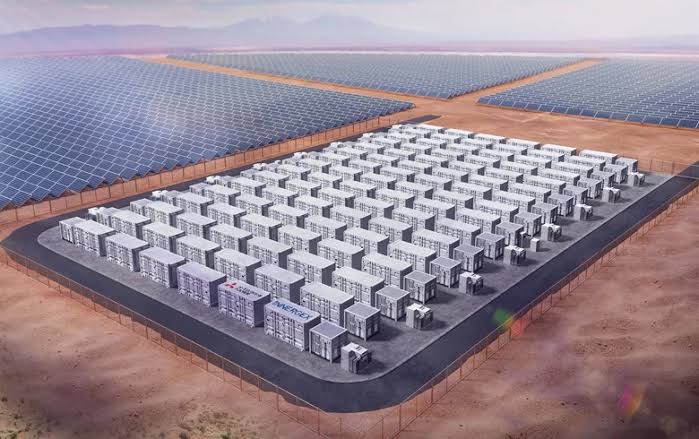
Consequence analysis for a BESS Project – The secret to a successful Fire Safety Study (FSS) and Preliminary Hazard Analysis (PHA).
Battery Energy Storage Systems (BESS) facilities are rapidly expanding in Australian energy landscape. There are 100s of BESS facilities bult and 1000s in the pipeline. BESS unique fire hazards and potential consequences require thorough risk assessments, including Fire Safety Studies (FSS) and Preliminary Hazard Analysis (PHA). One of the key components of these assessments is Consequence Analysis, which plays a crucial role in understanding and mitigating risks. This blog answered frequency asked questions from the BESS developer and principal contractor.
1 What is a BESS facility?
A Battery Energy Storage System (BESS) is a facility designed to store electrical energy in batteries for later use. These are mainly grid scale more than 1 MW or 2 MWh containerized systems. BESS facilities range from small residential setups to large-scale industrial and utility installations.
In NSW and Victoria, various fire brigade and dept. of planning guidelines indicated any BESS more than 1 MW discharge capacity is considered large scale, subject to some exemption. The requirements for various fire safety and land use planning reports depend on the BESS capacity.
Please Contact Us for more accurate advice.
2 What is thermal runaway?
Thermal runaway is a self-sustaining reaction within a battery cell that occurs due to damage, overcharging, or overheating. This reaction can lead to release of flammable and toxic off-gases such as H2, CH4, HF, HCN, HCl, CO, etc. The gases consequently cause fire, explosion, and toxic exposure. It is a primary concern in BESS safety assessments, as it can quickly escalate and impact surrounding equipment, structures, and personnel.
3 How does battery chemistry impact off-gas emission and consequence analysis??
Battery chemistry significantly influences the type and volume of gases released during a thermal runaway event. Different battery chemistries—such as lithium iron phosphate (LFP), Lithium-ion manganese (LMO) and lithium nickel manganese cobalt oxide (NMC), etc. produce varying levels of flammable, toxic, and explosive gases like hydrogen, carbon monoxide, and hydrofluoric acid. Consequence analysis must account for these variations to accurately model the risks associated with different BESS technologies
4 What is consequence analysis/modelling?
Consequence analysis (or consequence modelling) is a mathematical approach used to predict the potential impact of hazardous events, such as fires, explosions, and toxic gas releases. In a BESS project, this involves simulating worst-case and credible scenarios to understand:
- Fire and heat radiation impact
- Explosion overpressure zones
- Gas dispersion patterns and exposure risks
These modelling help in designing fire protection measures, emergency response plans, and overall risk mitigation strategies.
Seek assistance from the Risk and Safety Solutions Consultant – info@riskandsafetysolutions.au
5 What is the industry-leading software for consequence modelling?
Advanced modelling tools are essential for accurate and consistent consequence analysis. Some of the industry-best software packages include:
- DNV - Phast
- DNV - Safeti
- Gexcon - Effect
- GEXCON - RiskCurve
- FLACS (Flammable and Explosive Atmospheric Simulation)
- FDS (Fire Dynamics Simulator) – Ideal for simulating fire spread and smoke movement
At Risk and Safety Solutions Melbourne (RSSM), we have licenses for all these industry-standard software tools, ensuring precise and reliable consequence assessments for BESS projects.
6 What should be the basis of input data for modelling?
The accuracy of consequence modelling depends on high-quality input data. Key sources include:
- UL 9540A test reports – Provides data on fire propagation, heat release rate, and gas emissions for battery cells, modules, and racks.
- Recognized literature – Industry studies and empirical research help refine model parameters.
- Real-life field test reports – Data from on-site fire tests enhance the reliability of modelling results.
By using these credible data sources, RSSM ensures that its consequence analysis aligns with real-world BESS failure scenarios.
7 The link between quality consequence modelling, FSS, and PHA?
A robust consequence analysis directly impacts the effectiveness of an FSS and PHA:
FSS: Helps determine fire detection, suppression, and mitigation strategies based on potential fire and explosion hazards. The fire protection system demand should be determined based on the consequence modelling instead of solely codes and standards.
PHA: Identifies key risk factors, failure modes, and safeguards to prevent hazardous events. Determination of both onsite and offsite impact should be based on the consequences analysis, thus it consequence modelling play a major role in decision making. Without accurate consequence modelling, FSS and PHA may lack the necessary detail to inform risk mitigation strategies, leading to inadequate safety measures and increased regulatory scrutiny. In some cases, government agency may reject an application of a development if risk level is not within a tolerance level.
8 Where can you get more help on conducting consequence modelling?
At RSSM, we specialize in BESS fire safety assessments, having successfully completed numerous consequence analysis studies for clients across Australia. Our expert consultants provide tailored solutions to ensure regulatory compliance and optimal risk management for your BESS projects. Need assistance with consequence analysis for your BESS site? Contact RSSM today at www.riskandsafetysolutions.au to learn how we can support your project with cutting-edge safety assessments
Reach out to us directly through our Contact Us page
References:
- Hazardous Industry Planning Advisory Paper (HIPAP) No. 2: Fire Safety Study
- Hazardous Industry Planning Advisory Paper (HIPAP) No. 4: Risk Criteria for Land Use Safety Planning
- HIPAP No. 6: Hazard Analysis
- HIPAP No. 10: Land Use Safety Planning
- NSW Department of Planning and Environment (DPE)
- Victorian Department of Transport and Planning (DTP)
- Fire Rescue Victoria (FRV) Guideline GL-55 – Battery Energy Storage Facility
- DNV Phast and Safeti, Gexcon Effect, Gexcon RiskCurve, and FLACS software documentation